
Description
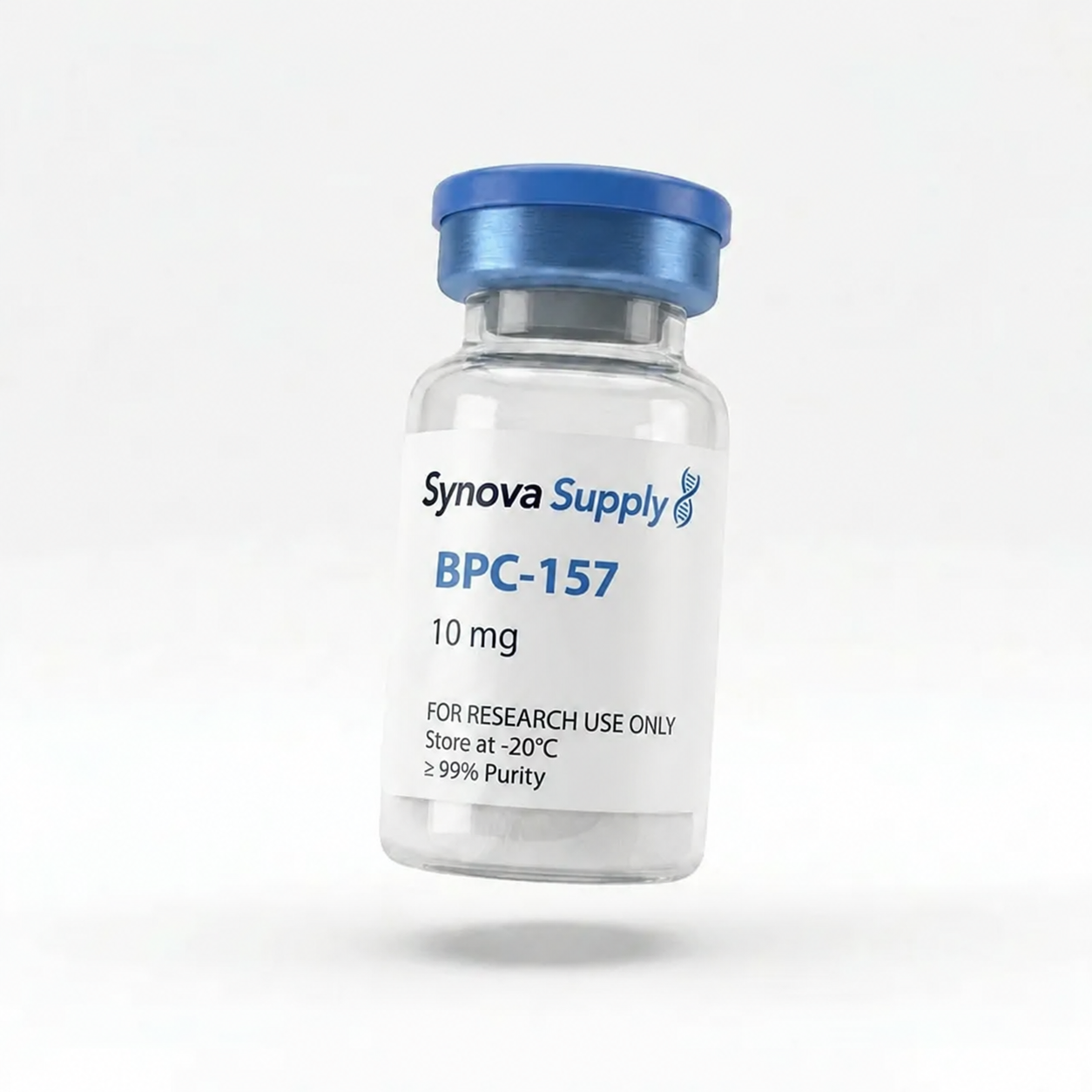
BPC-157 is a synthetic pentadecapeptide consisting of 15 amino acids with the sequence Gly-Glu-Pro-Pro-Pro-Gly-Lys-Pro-Ala-Asp-Asp-Ala-Gly-Leu-Val, derived from a conserved sequence of human gastric juice protein BPC. First described in the early 1990s, it has accumulated one of the most extensive preclinical research profiles of any peptide in the research reagent market, with published studies spanning musculoskeletal repair, gastrointestinal biology, angiogenesis, and neurological research contexts.
Musculoskeletal and Connective Tissue Research BPC-157 has been among the most studied peptides in preclinical musculoskeletal repair research. Published animal model studies have examined its effects on tendon-to-bone healing, ligament repair, and muscle tissue recovery following experimentally induced injuries. Research has investigated its influence on fibroblast migration and proliferation in tendon tissue cultures, its modulation of growth factor expression including EGF and FGF, and its effects on collagen organization in healing connective tissue. Studies examining Achilles tendon, rotator cuff, and ACL repair models have been widely published in peer-reviewed journals.
Gastrointestinal Research Given its derivation from a gastric juice protein sequence, BPC-157 has been extensively studied in gastrointestinal biology. Preclinical research has examined its effects on gastric mucosal repair, intestinal epithelial cell migration, and inflammatory bowel models in rodents. Studies have investigated its modulation of nitric oxide synthesis in gastrointestinal tissue, its effects on tight junction protein expression in intestinal epithelium, and its influence on ulcer healing rates in experimentally induced gastric injury models.
Angiogenesis Research A significant body of preclinical literature has examined BPC-157’s pro-angiogenic properties. Studies have investigated its effects on VEGF expression, endothelial cell proliferation, and new blood vessel formation in wound healing and tissue repair models. Research has also examined its influence on nitric oxide signaling pathways, which are closely linked to vascular function and endothelial biology.
Growth Hormone Receptor Research Published preclinical studies have examined BPC-157’s interactions with growth hormone receptor pathways, including its effects on GH receptor expression in various tissue types and its relationship to IGF-1 signaling in musculoskeletal tissue models. This area of research positions it as a tool for studying the intersection of GH axis signaling and tissue repair biology.
Neurological Research Emerging preclinical literature has examined BPC-157 in neurological research contexts, including studies on dopamine and serotonin system modulation in rodent models, neuroprotective effects following experimentally induced brain injury, and its influence on GABA receptor expression. These studies represent a growing area of research interest beyond its established tissue repair profile.
Research Context BPC-157 has one of the largest published preclinical research databases of any peptide research reagent currently available. Its stability in aqueous solution, well-characterized receptor interaction profile, and extensive published literature make it a frequently referenced comparator compound in tissue biology and repair research study designs.
Supplied as: Lyophilized powder, sealed vial Purity: ≥99.1% (HPLC verified per batch) Testing: Independent third-party mass spectrometry and HPLC Origin: United States Storage: −20°C, protected from light and moisture Reconstitution: Bacteriostatic water (not included)
For research use only. Not for human or animal administration. Must be handled by a qualified researcher in a licensed laboratory setting. This product is not approved by the FDA and is not intended for diagnostic or therapeutic use.
Reviews
There are no reviews yet.