
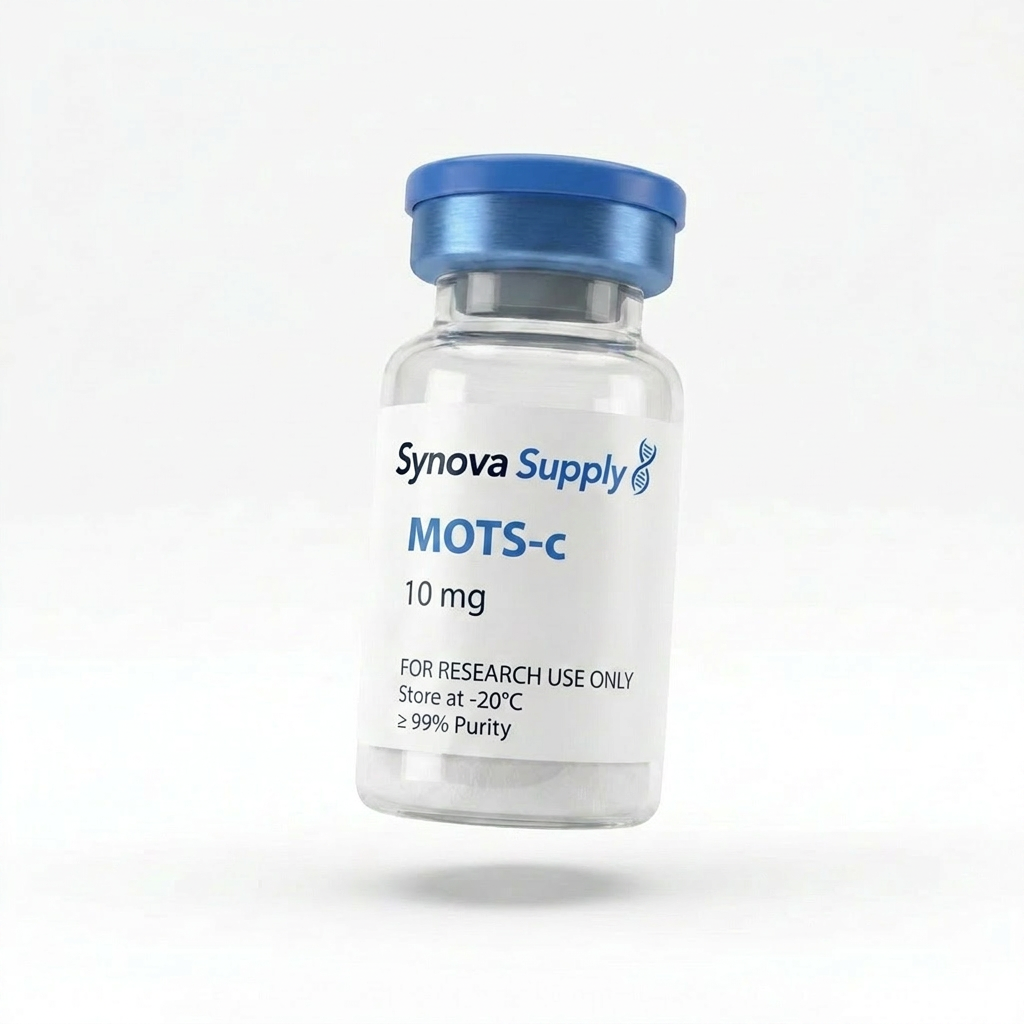
Description
MOTS-c is a 16-amino acid peptide encoded within the 12S ribosomal RNA (rRNA) gene of mitochondrial DNA, making it a member of a newly characterized class of signaling molecules known as mitochondria-derived peptides (MDPs). First described by Lee et al. in 2015, it represents a significant development in mitochondrial biology research, demonstrating that mitochondrial DNA encodes bioactive peptides capable of regulating cellular metabolism and stress responses independent of the nuclear genome.
Metabolic Regulation Research MOTS-c has been the subject of substantial preclinical research examining its role in metabolic homeostasis. In vitro and animal model studies have investigated its activation of the AMPK (AMP-activated protein kinase) pathway, a central regulator of cellular energy balance. Research has examined its effects on glucose uptake in skeletal muscle cells, fatty acid oxidation, and insulin sensitivity in rodent models of diet-induced metabolic dysfunction. Published studies have explored its ability to regulate the folate-methionine cycle and its downstream effects on nucleotide synthesis and one-carbon metabolism.
Mitochondrial Biology and Stress Response As a mitochondria-derived signaling peptide, MOTS-c has been studied in the context of mitochondrial stress responses and retrograde signaling — the communication pathway from mitochondria to the nucleus. Research has examined how MOTS-c expression changes under conditions of mitochondrial stress and how it translocates to the nucleus to regulate gene expression programs associated with cellular adaptation and survival.
Longevity and Aging Research MOTS-c has attracted significant attention in longevity research. Published studies have examined its circulating levels in relation to age and metabolic health status in both animal models and human observational research. Preclinical studies have investigated its effects on lifespan extension in model organisms and its role in regulating pathways associated with cellular senescence and age-related metabolic decline, including the mTOR and AMPK signaling axes.
Exercise Biology Research A notable area of MOTS-c research involves its relationship to physical activity. Studies have examined exercise-induced changes in circulating MOTS-c levels in animal models and explored its role as a potential exercise mimetic in preclinical settings, with research focusing on its effects on skeletal muscle metabolism, mitochondrial biogenesis markers, and endurance performance parameters in rodent models.
Inflammation Research Preclinical literature has also examined MOTS-c’s modulatory effects on inflammatory signaling pathways. Studies have investigated its influence on NF-κB activity, cytokine expression profiles, and macrophage polarization in cell culture models, positioning it as a research tool for studying the intersection of metabolic and inflammatory signaling.
Supplied as: Lyophilized powder, sealed vial Purity: ≥99% (HPLC verified per batch) Testing: Independent third-party mass spectrometry and HPLC Origin: United States Storage: −20°C, protected from light and moisture Reconstitution: Bacteriostatic water (not included)
For research use only. Not for human or animal administration. Must be handled by a qualified researcher in a licensed laboratory setting. This product is not approved by the FDA and is not intended for diagnostic or therapeutic use.



Reviews
There are no reviews yet.