
Description
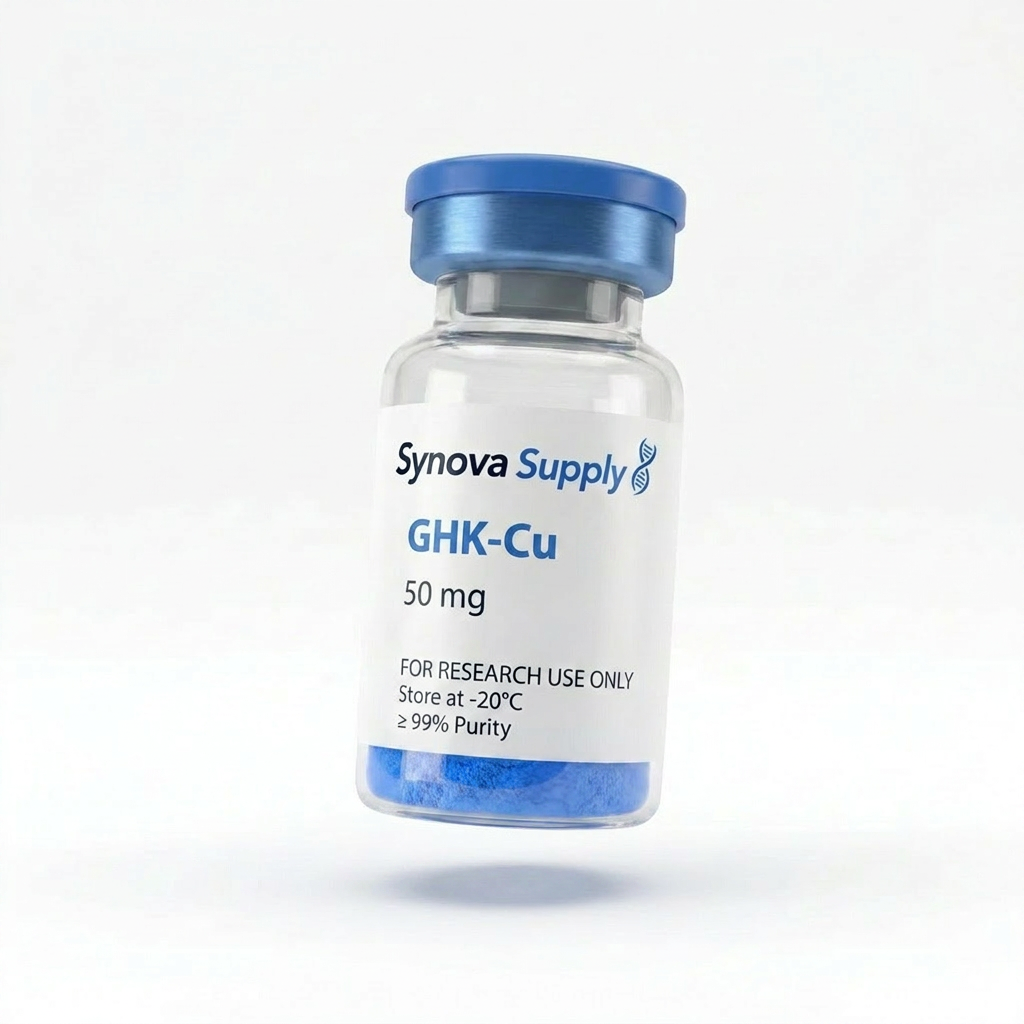
GHK-Cu (Glycyl-L-Histidyl-L-Lysine Copper) is a naturally occurring tripeptide first isolated from human plasma, where it is present at concentrations that decline significantly with age. It consists of the amino acid sequence Gly-His-Lys complexed with a copper (II) ion, which it binds with high affinity. As one of the most studied copper-binding peptides in dermatological and tissue biology research, it has accumulated a substantial body of preclinical literature spanning several decades.
Extracellular Matrix Research Preclinical studies have extensively examined GHK-Cu’s role in extracellular matrix remodeling. In fibroblast cell culture models, published research has investigated its effects on collagen synthesis, elastin production, and glycosaminoglycan expression. Studies have also examined its modulation of matrix metalloproteinase (MMP) activity, including both the upregulation of remodeling enzymes and the concurrent stimulation of their tissue inhibitors (TIMPs), suggesting a regulatory rather than simply stimulatory role in matrix homeostasis.
Wound Repair Signaling GHK-Cu has been studied in the context of wound repair signaling pathways in multiple preclinical models. Research has examined its effects on fibroblast migration and proliferation, keratinocyte differentiation, and the regulation of growth factors including TGF-beta and VEGF in wound healing contexts. Animal model studies have investigated its influence on wound contraction rates and re-epithelialization timelines.
Antioxidant and Gene Expression Research Published literature has examined GHK-Cu’s influence on oxidative stress markers, including its effects on superoxide dismutase activity and reactive oxygen species (ROS) levels in cell culture systems. Gene expression studies using microarray analysis have reported GHK-Cu’s influence on a broad range of genes associated with inflammation resolution, DNA repair, and mitochondrial function, making it a research tool of interest in aging biology and cellular stress response studies.
Angiogenesis Research Preclinical studies have examined GHK-Cu’s role in stimulating vascular endothelial growth factor (VEGF) expression and its downstream effects on endothelial cell behavior, positioning it as a research reagent for angiogenesis pathway studies.
Supplied as: Lyophilized powder, sealed vial Purity: ≥99% (HPLC verified per batch) Testing: Independent third-party mass spectrometry and HPLC Origin: United States Storage: −20°C, protected from light and moisture Reconstitution: Bacteriostatic water (not included)
For research use only. Not for human or animal administration. Must be handled by a qualified researcher in a licensed laboratory setting. This product is not approved by the FDA and is not intended for diagnostic or therapeutic use.
Reviews
There are no reviews yet.