
Description
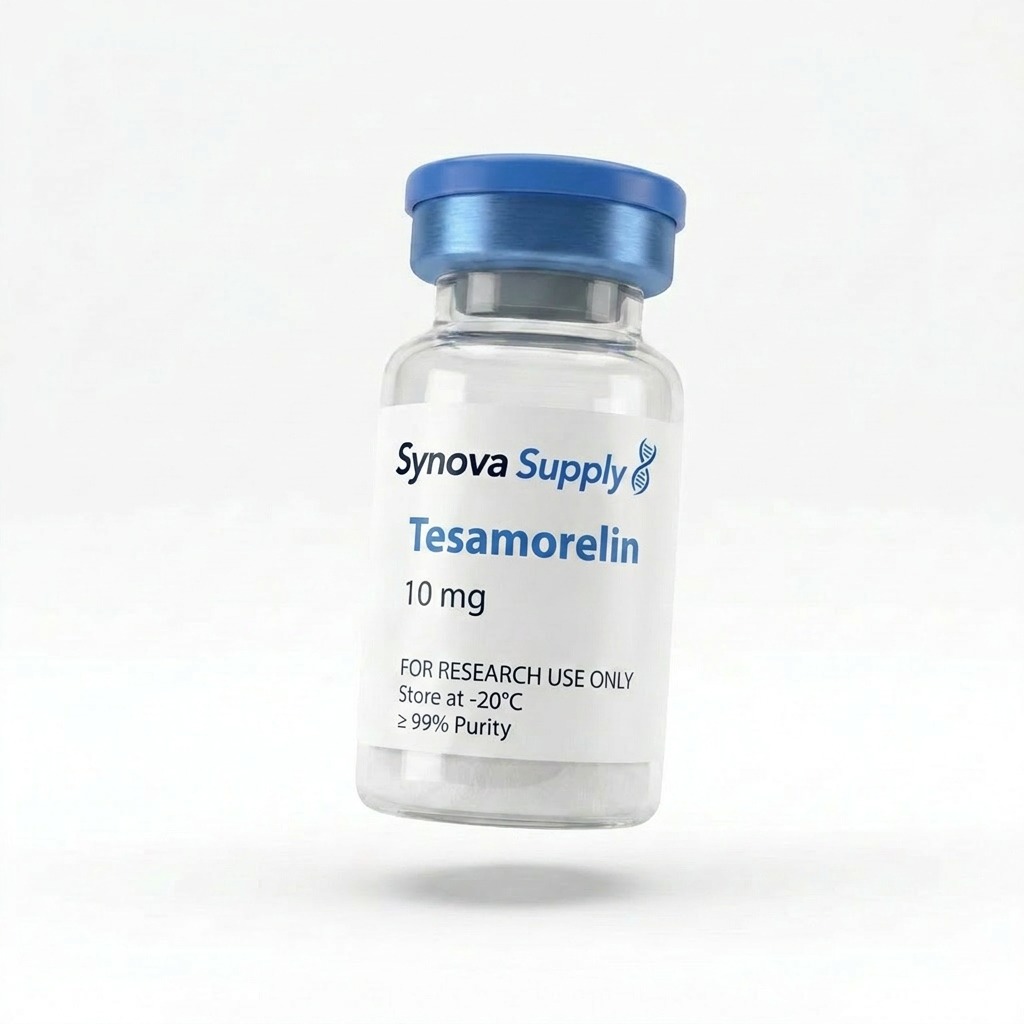
Tesamorelin is a synthetic stabilized analogue of endogenous growth hormone-releasing hormone (GHRH), comprising the complete 44-amino acid sequence of human GHRH(1-44) with a trans-3-hexenoic acid moiety conjugated at the N-terminus. This modification confers significantly improved proteolytic stability compared to native GHRH while preserving full receptor binding activity at the pituitary GHRH receptor. It is one of the most well-characterized GHRH analogues in the research literature, with a substantial body of published preclinical and clinical data.
GHRH Receptor Binding and GH Secretion Research Tesamorelin’s primary area of preclinical research interest involves its activity at the GHRH receptor (GHRHR) on pituitary somatotroph cells. In vitro studies have examined its receptor binding kinetics, affinity constants, and downstream signaling through the cAMP-PKA pathway leading to growth hormone secretion. Animal model research has investigated its effects on GH pulse amplitude and frequency, IGF-1 levels, and the hypothalamic-pituitary-somatotropic axis regulation in various experimental contexts.
Lipid Metabolism and Visceral Adipose Research A significant body of preclinical and translational research has examined tesamorelin’s effects on lipid metabolism, with particular focus on visceral adipose tissue dynamics. Studies in animal models have investigated the mechanisms by which GH axis stimulation influences lipolysis in visceral fat depots, triglyceride clearance, and hepatic lipid accumulation. This area of research has been extensively explored in the context of metabolic dysregulation models, making tesamorelin a well-characterized research tool for studying GH-mediated fat
Reviews
There are no reviews yet.